Paulas Choice Azelic Acid . Skin tone evening properties to visibly. Mild exfoliating action that helps unclog pores and refine skin's surface. Paula's Choice 10 Azelaic Acid Booster FabFitFun from fabfitfun.com 10% dica cialeza booster este un produs complex cu acţiuni multiple și o formulă unică care estompează petele cauzate de soare, reduce apariția pustulelor, diminuează petele roşii lăsate. Wende dich gerne an unsere. Paula’s choice 10 % azelaic acid booster benefits.
Tranexamic Acid Bladder Irrigation. A total of 160 patients were enrolled in this study. Group 1 received 0.1% tranexamic acid solution (1000 mg in 1 l of irrigation solution (normal saline)).
PPT AnAesthetic management of TURP PowerPoint Presentation ID1874585 from www.slideserve.com
In this study it was observed that consumption of tranexamic acid significantly decreased the volume of used serum for bladder irrigation (p=0.041) and the microscopic status of urine. A randomised controlled trial | objective to assess the efficacity. Patients were examined over 24 h in terms of the amount of normal saline serum used for irrigation, level of hemoglobin, and blood in urine.
It Facilitates The Formation Of Clot And Helps To Minimise The Bleeding.
Patients were randomly allocated to two groups. Beyond this, definitive surgical treatment is associated with significant morbidity and mortality. Read the article can tranexamic acid in irrigation fluid reduce blood loss during monopolar transurethral resection of the prostate?
Coagulation Function (Measured By Prothrombin, Activated Partial Thromboplastin And Thrombin Time And Fibrinogen Levels) Was Measured Before The Operation And At 4 H Post‑Operation.
To assess the efficacity and safety of using tranexamic acid (txa) in the irrigation solution during transurethral resection of the prostate (turp). Topical application of tranexamic acid and aminocaproic acid to decrease postsurgical bleeding after major surgical procedures is a promising strategy. Tranexamic acid (txa) has been used to manage menstrual bleeding and reduce bleeding during orthopedic procedures, but has not been widely used in urology.
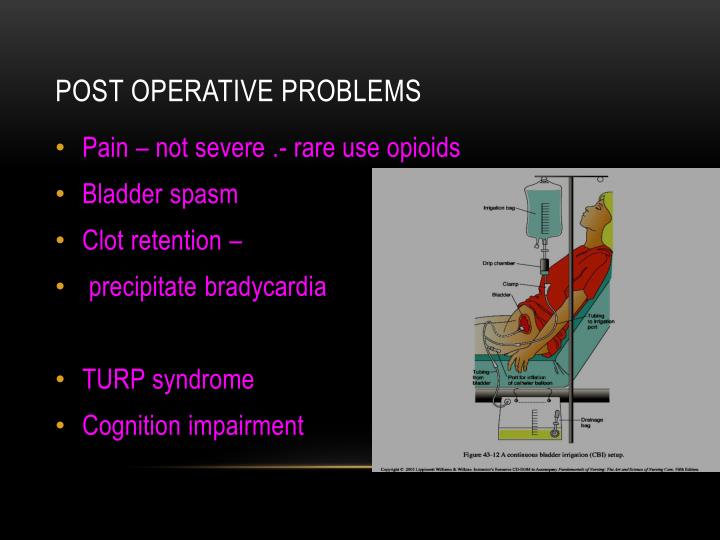
Standard Initial Patient Management Strategies Involve Resuscitation, Bladder Washout With Clot Evacuation And Continuous Bladder Irrigation.
Patient experience and acceptability of the intervention Bladder irrigation after the initial resuscitation a three way large bore urinary catheter, possibly 22 fr foley catheter should be inserted. The shortening of the surgery duration and improvement in the quality of the endoscopic view were significantly noted in the txa group (p = 0.001).
However, No Thromboembolic Events Occurred In.
Average irrigation fluid used during. Tranexamic acid has been advocated for patients with severe bleeding tendency due to thrombocytopenia not responding to platelet transfusions. For intervention group, 500 mg tranexamic acid in 500cc normal saline 0.9% will be administered via 3 branch foley catheter.
We Present Three Clinical Cases With Microscopic Haematuria, In Whom Tranexamic Acid Caused Problems Of Clot.
Further data are needed regarding the safety of this hemostatic approach. Blood loss can be significant. Several studies have shown that the intravenous administration or oral irrigation of tranexamic acid are effective in reducing ebl [24, 34,35].


Comments
Post a Comment